Glabella
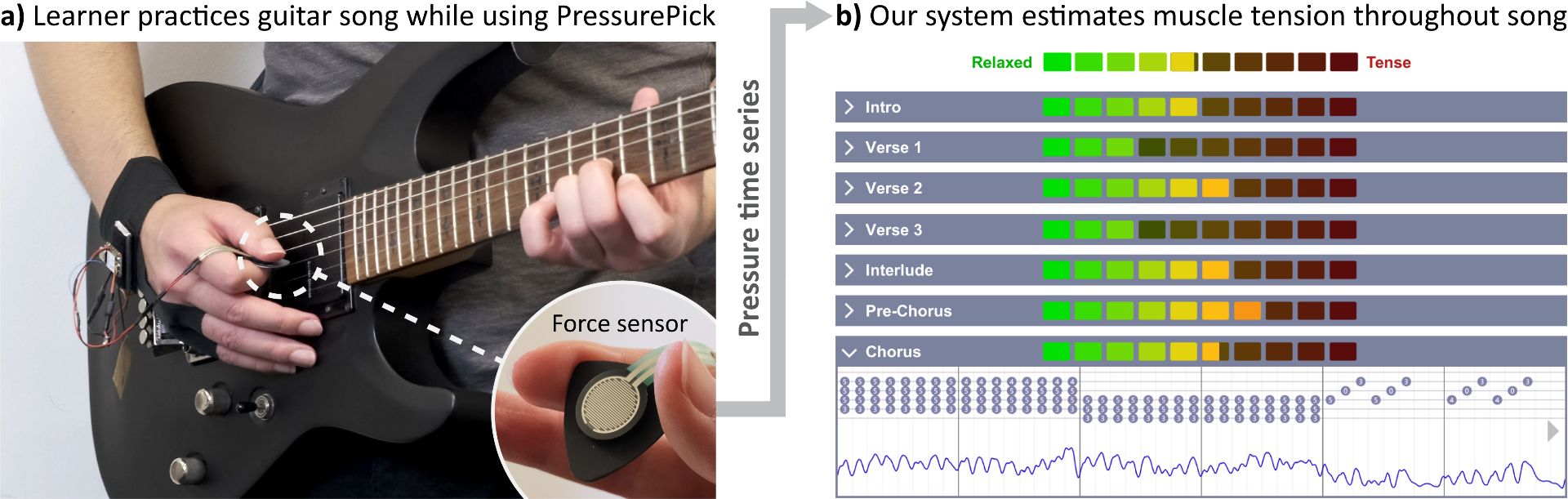
When learning to play an instrument, it is crucial for the learner’s muscles to be in a relaxed state when practicing. Identifying, which parts of a song lead to increased muscle tension requires self-awareness during an already cognitively demanding task. In this work, we investigate unobtrusive pressure sensing for estimating muscle tension while practicing songs with the guitar. First, we collected data from twelve guitarists. Our apparatus consisted of three pressure sensors (one on each side of the guitar pick and one on the guitar neck) to determine the sensor that is most suitable for automatically estimating muscle tension. Second, we extracted features from the pressure time series that are indicative of muscle tension. Third, we present the hardware and software design of our PressurePick prototype, which is directly informed by the data collection and subsequent analysis.
Andreas Fender, Derek Witzig, Max Moebus, and Christian Holz. PressurePick: Muscle Tension Estimation for Guitar Players Using Unobtrusive Pressure Sensing. In Proceedings of ACM UIST 2023.
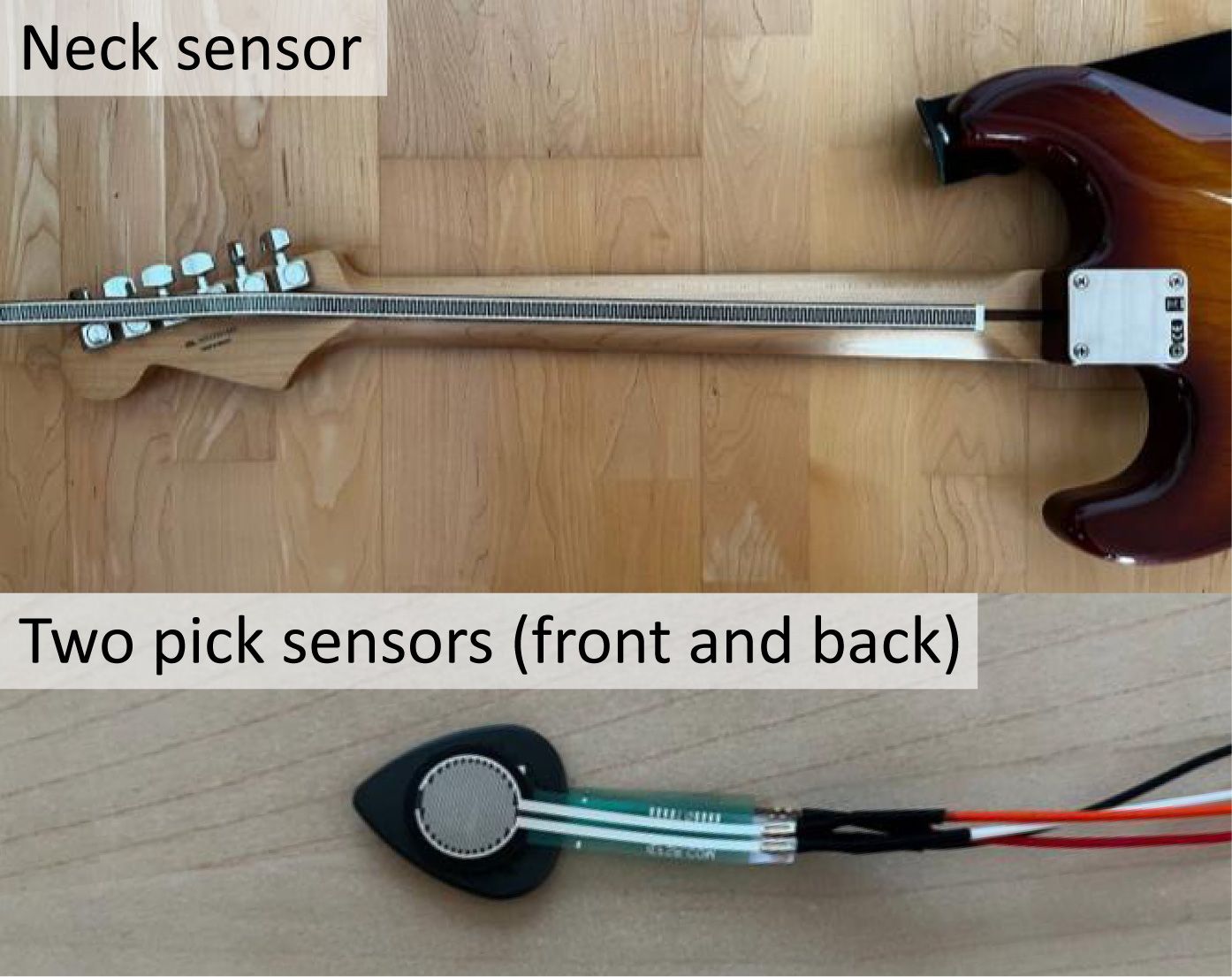
Sensor arrangement of our data collection. Top: A long FSR strip along the neck of the guitar. Bottom: Two circular FSR s attached to a guitar pick (front and back).
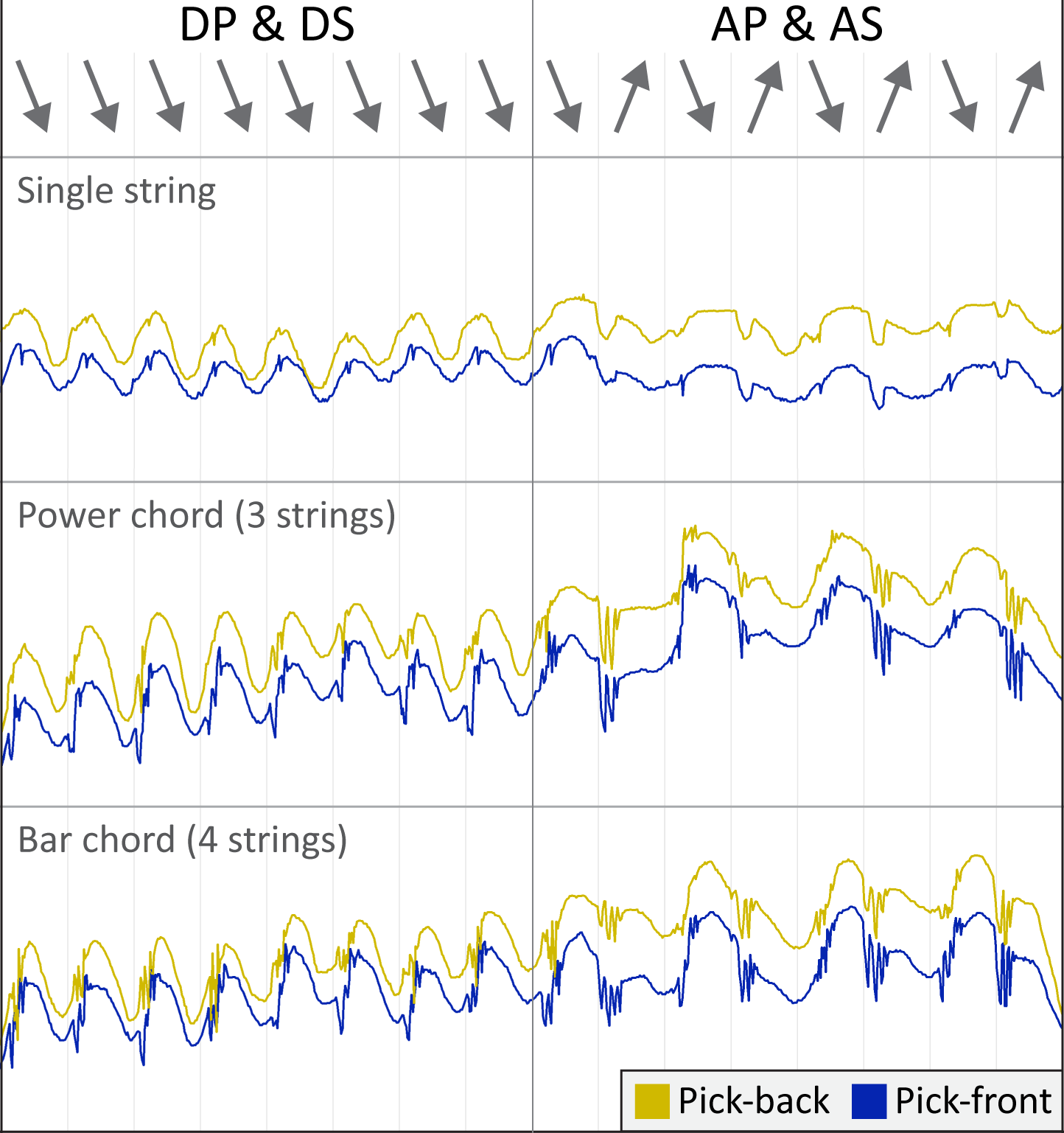
Pressure time series on the two sensors of the pick to visually compare down-picking and alternate-picking (or strumming in the case of chords) each with 1, 3 or 4 strings hit. The x-axis is time and the y-axis is pressure in all plots.
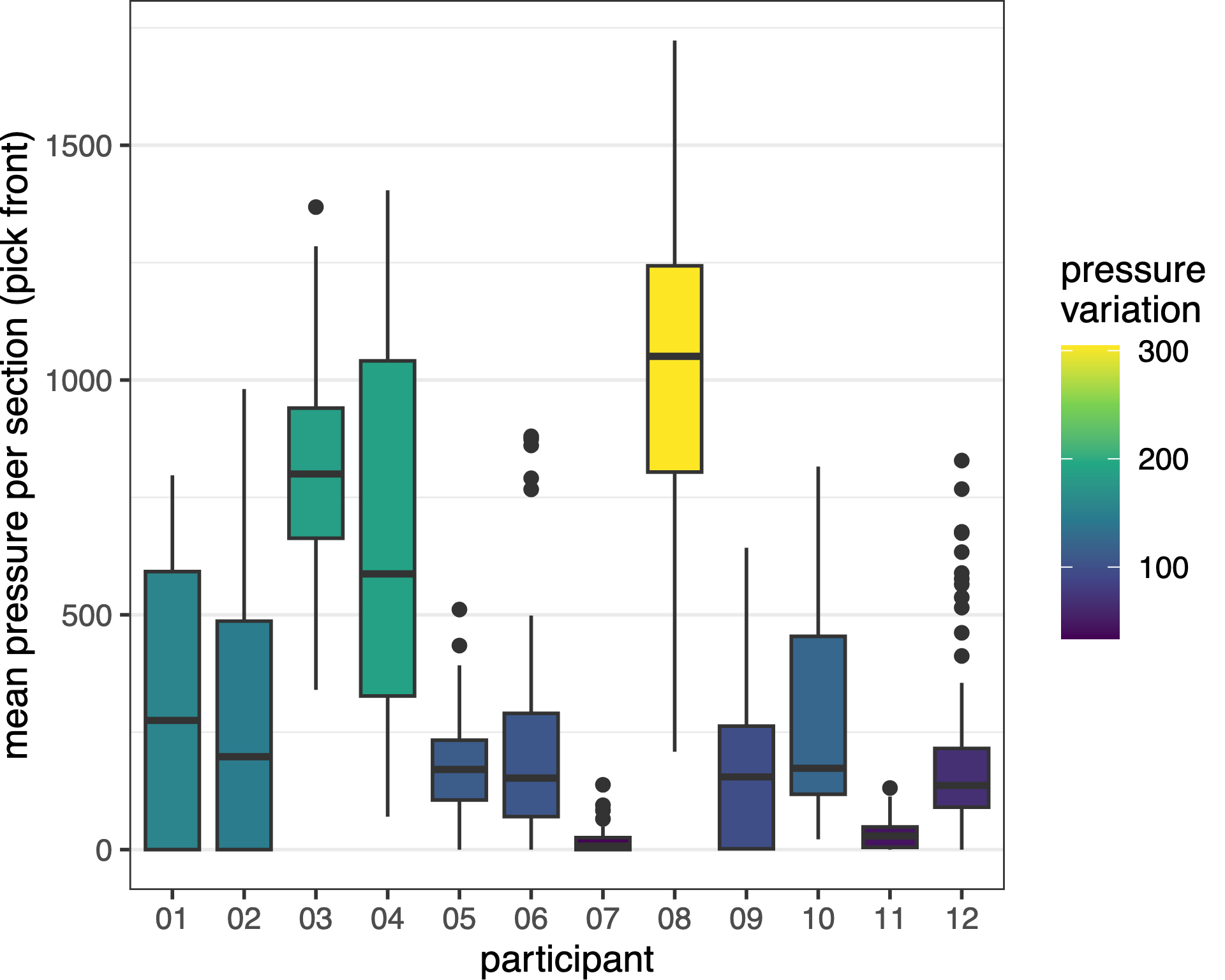
The distribution of pressure per participant recorded from the pick’s front sensor across all exercises. The box plots are colored based on the average standard deviation of the pressure signal in each section per participant.
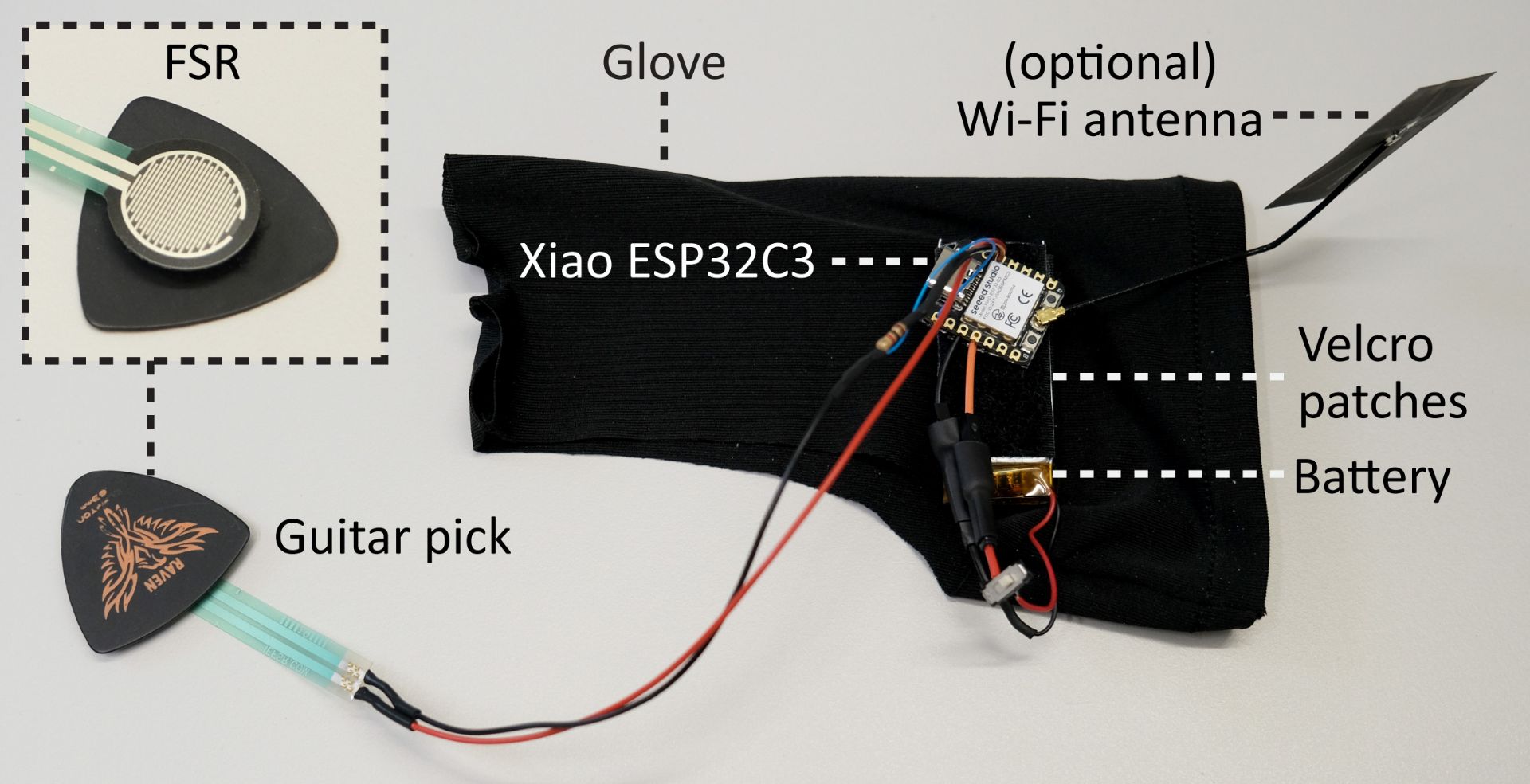
Hardware of our PressurePick prototype device. We use an FSR on the guitar pick. The remaining components are attached to a drawing glove (all fingers exposed). A battery can be attached between the glove and the device (when using the device wirelessly).
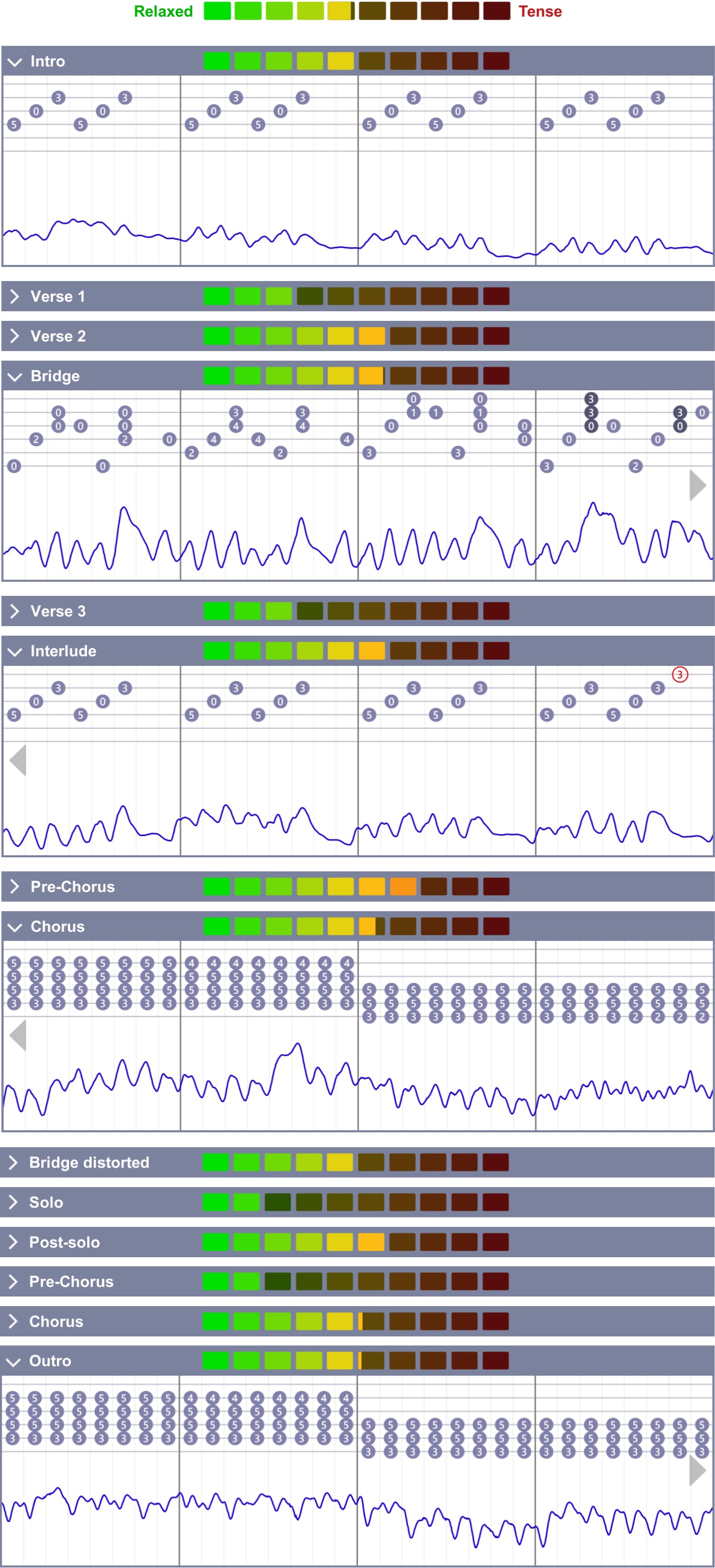
The user interface of our prototype. The top shows the overall estimated muscle tension ranging from green (Relaxed) to red (Tense). We also visualize the estimations for each part of the song. In addition, each song part can be expanded to closely inspect the recorded pressure time series synchronized with the tabs of the song. Red circles in the tablatures indicate missed notes. For instance, the last hit of Interlude is detected as missing.