Glabella
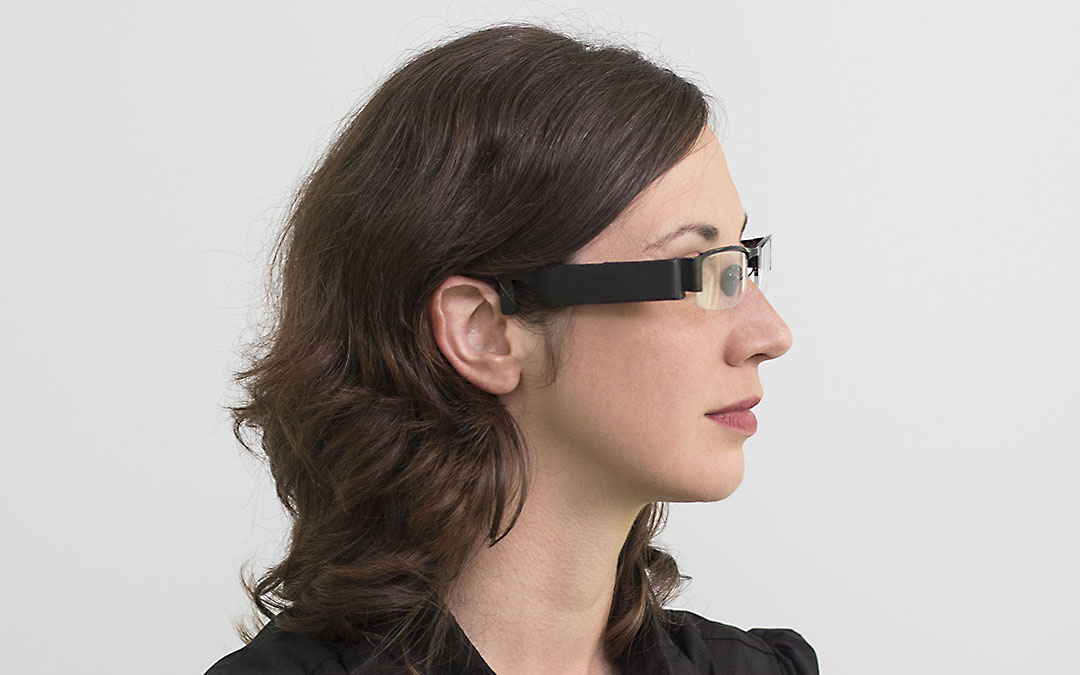
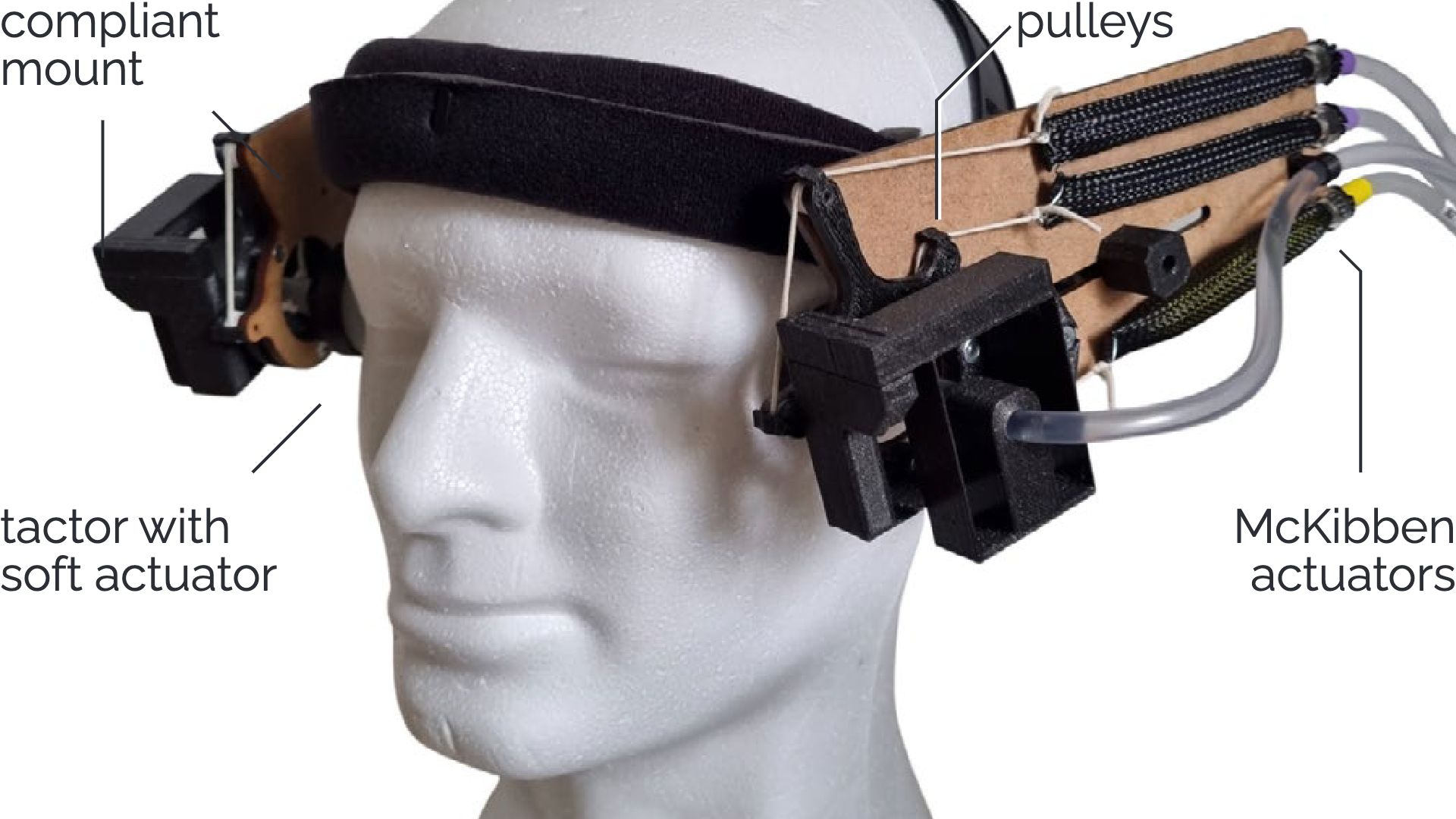
Massage therapy is helpful for the rehabilitation of various diseases, such as headaches caused by migraines and stress. Existing robotic systems have focused on massage therapy on the torso and limbs, but performing massage motions through suitable actuation on a person’s head has been a challenge. In this paper, we present MiBOT, a head-worn massage robot that actuates two soft tactors to produce touch motions mimicking human massage. A key design principle behind MiBOT is its silent actuation, which we achieve through pneumatic artificial muscles in conjunction with a controller loop to respond to contact pressure. We evaluated the effectiveness of MiBOT in a controlled study and assessed subjects’ blood pressure and heart rate levels while applying MiBOT. We found that our mechanical system generated positive and conclusive quantitative outcomes that are similar to the human-administered massage, decreasing participants’ mean systolic and diastolic blood pressure by 2.8 mmHg and 1.7 mmHg, respectively, as well as calming their heart rate by 8-10% on average.
Alice Mylaeus, Stephanie Vogt, Berken Utku Demirel, Marcel Gort, Mirko Meboldt, Manuel Meier, and Christian Holz. MiBOT: A head-worn robot that modulates cardiovascular responses through human-like soft massage. In International Conference on Robotics and Automation 2024 (IEEE ICRA).
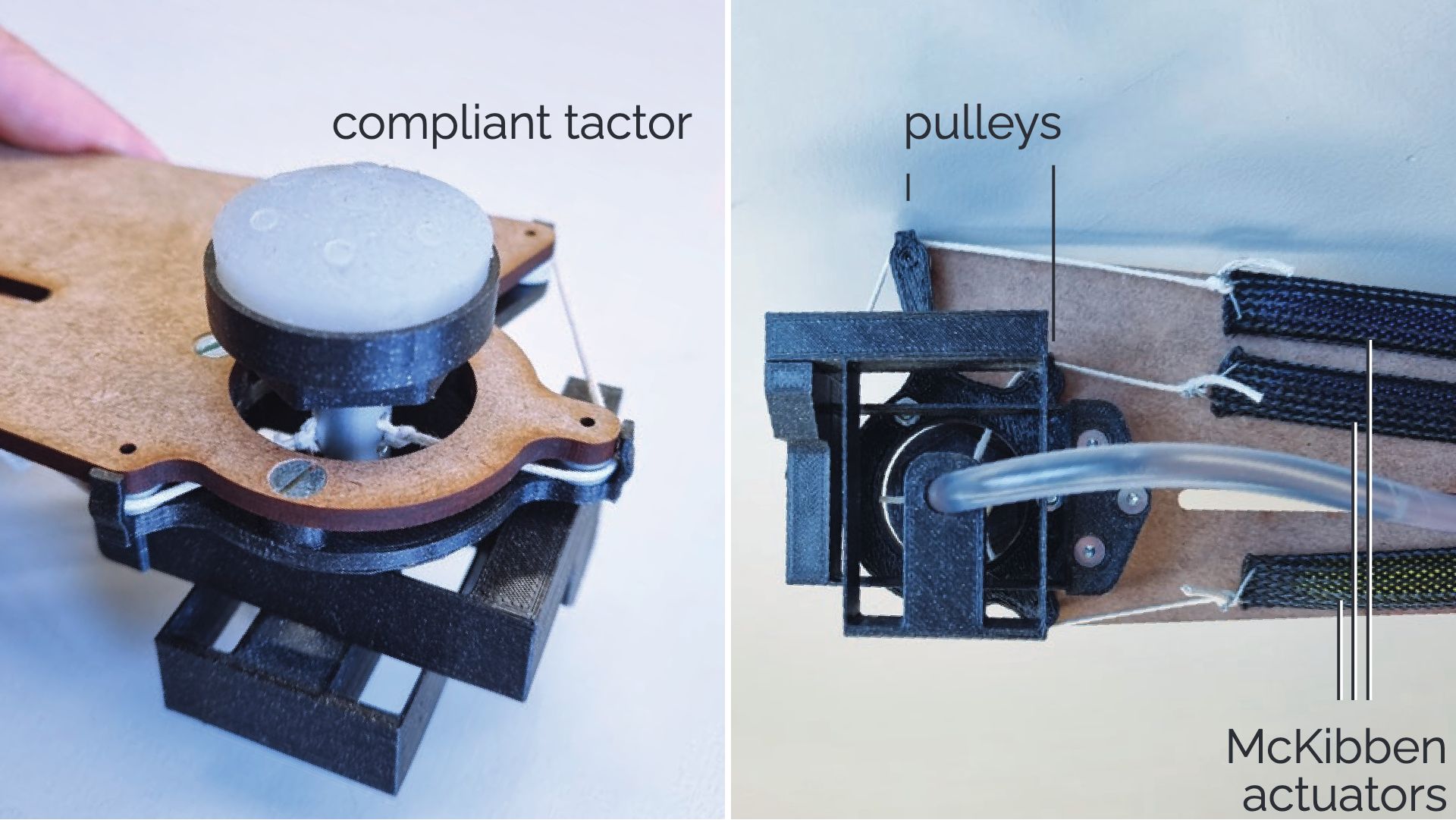
The compliant tactor and the pulleys for providing guidance and force transfer. MiBOT integrates compliant mechanisms (a) and pulleys (b) to transform unidirectional motion into circular massage motions that approximates human-like touch.
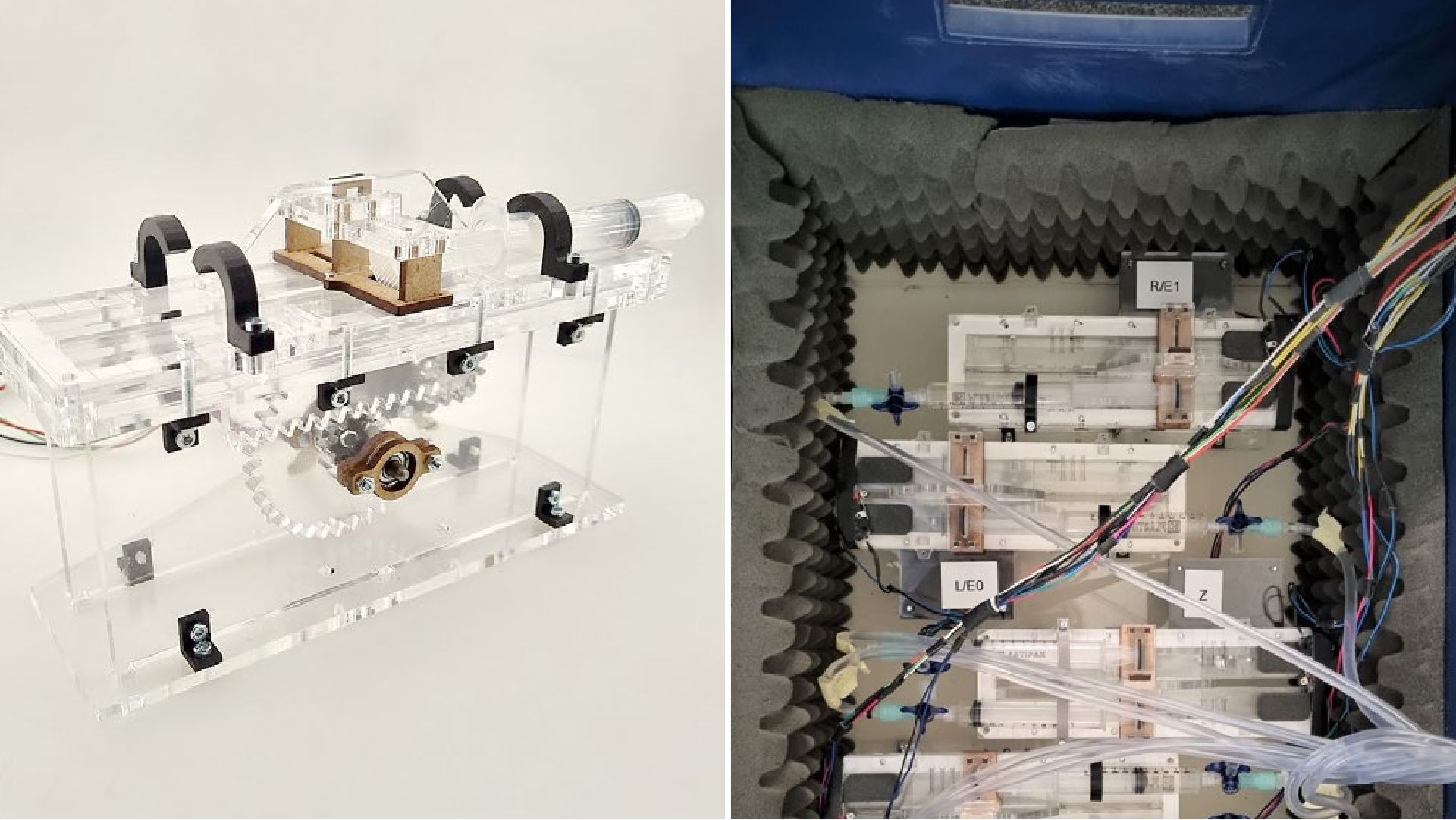
(left) An actuation block with the stepper motor, 3:1 gear reduction, and a rack to compress the mounted syringes. (right) A sound-insulated box houses five actuation blocks; three drive two syringes for circular massage motion and two drive one syringe each for tactor pressure adaptation.
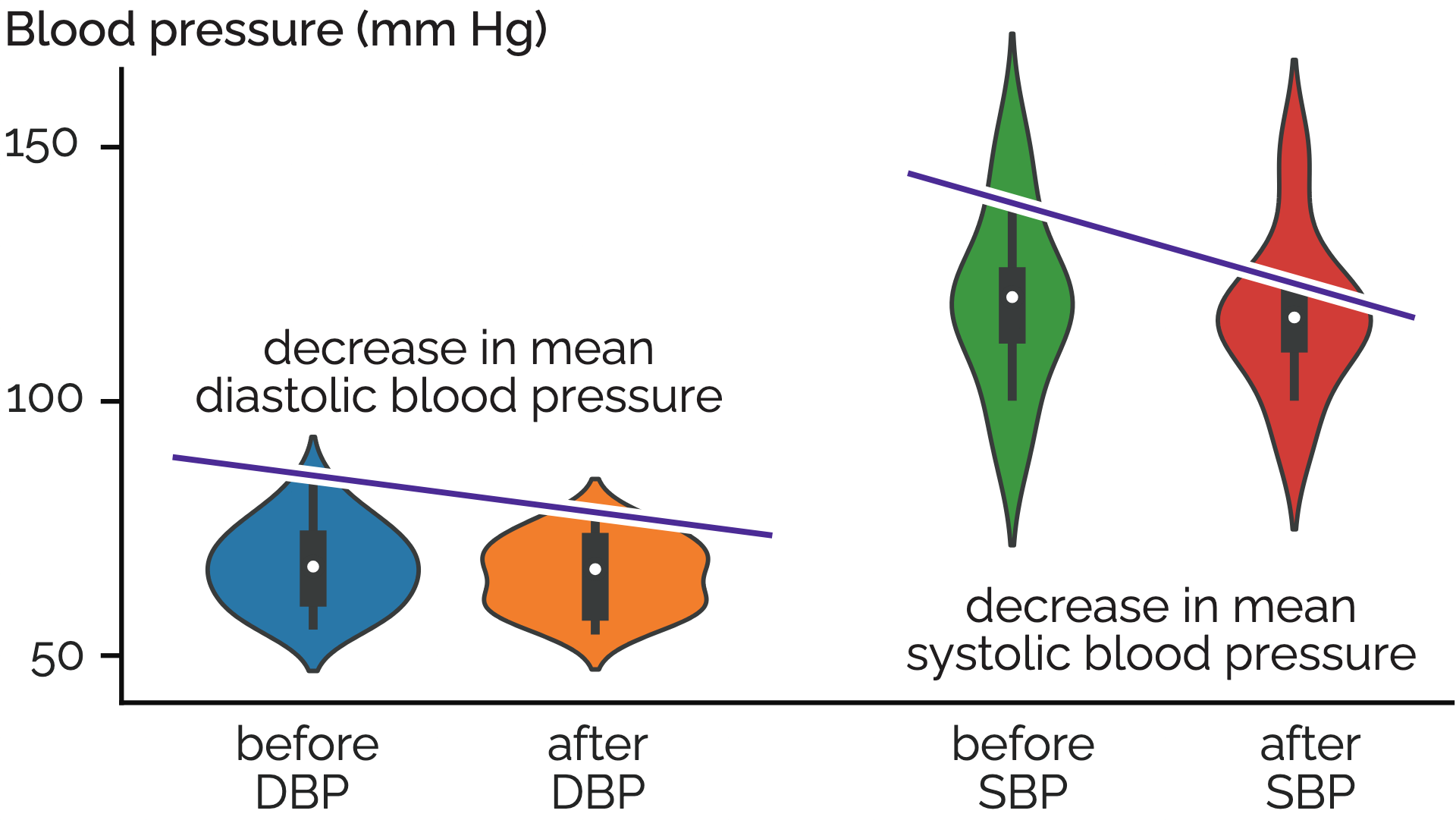
The statistical violin plots for blood pressure (DBP (left) and SBP (right)) given in direct comparison with before applying the massage and after. The plot indicates the positive effect of massage on BP values for participants. The violin plot includes the box plot (defined as Q1 and Q3 quartiles, and median) with a kernel density estimation over the points.
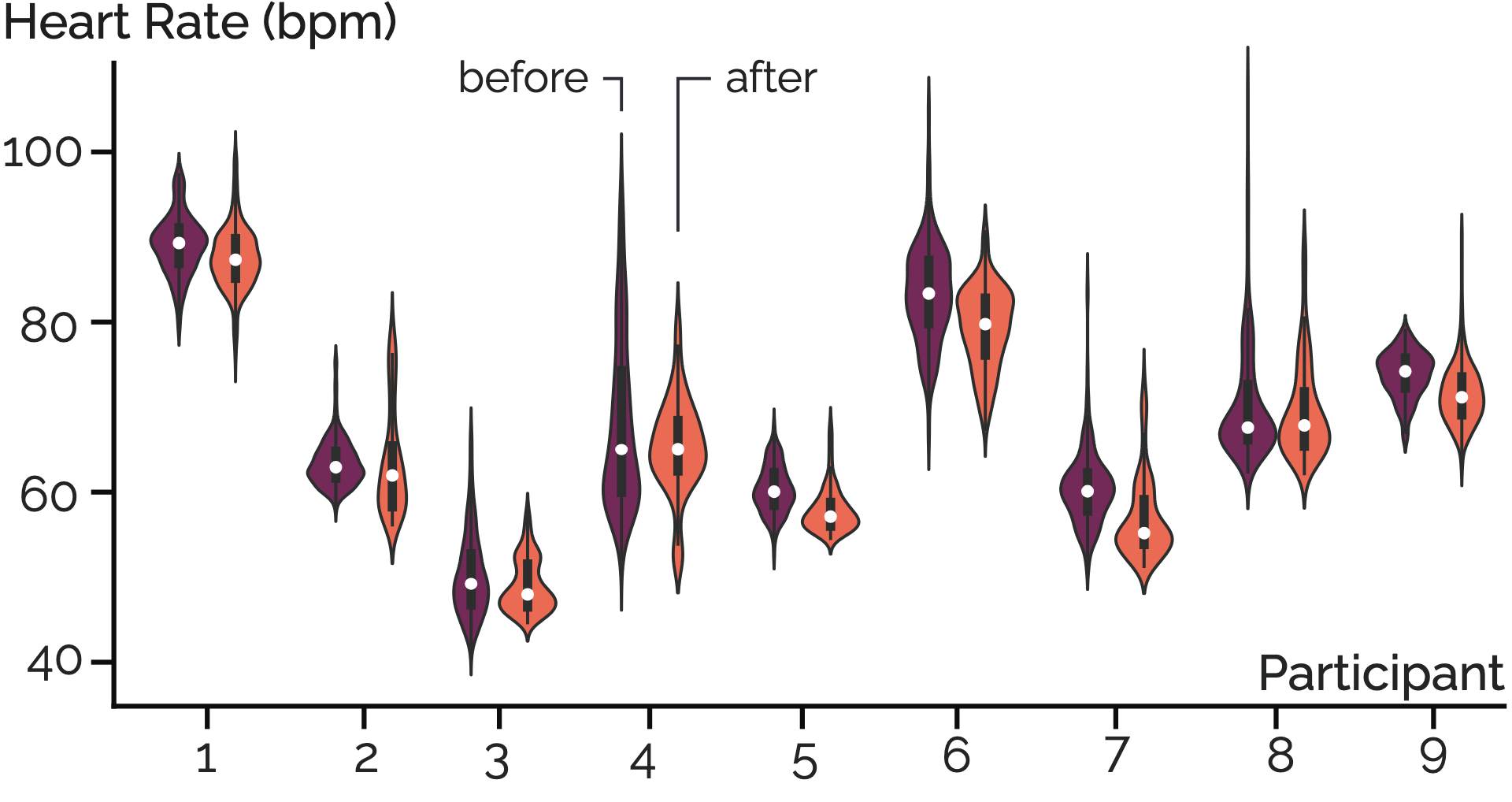
Violin plots showing the effect of MiBOT on participants’ HR after applying the massage. The HR’s distribution mean decreased in six out of nine participants. Box plots inside the violins (Q1 and Q3 quartiles, and median) show a kernel density estimation over the points. White circles show each participant’s median before and after the massage.